Fashion advisor training UK: UK fashion school needed?
"The pursuit of a career in fashion requires more than just an eye for style; it demands a deep understanding of industry shifts and lasting quality."
Deciding whether a UK fashion school is the right path involves weighing formal education against practical industry shifts. This guide explores the professional landscape, the reality of industry standards, and how to navigate these choices.

Key takeaways include evaluating long-term sustainability, understanding the role of prestige in career building, and recognizing the shift toward durable goods.
Do I really need a UK fashion school for my career? A student sits at a wooden desk, sketching silhouettes while sunlight streams through a large window. The question of whether a specialized education is necessary often arises when looking at the industry's rapid evolution.
While formal training provides a foundation, the industry itself is moving toward specific standards that educators must address.
This shift suggests that a successful fashion advisor must master the nuances of durability and quality over mere trend-following.
A professional might look at historical accolades to understand the weight of institutional recognition.
In September 2010, the Couture Council of The Museum at the Fashion Institute of Technology presented Lagerfeld with an award created for him, The Couture Council Fashion Visionary Award, at a benefit luncheon at Avery Fisher Hall, in New York City.
Such moments highlight how formal recognition can validate a visionary's career.
While a degree provides a strong foundation, industry connections and a unique portfolio are often more vital for long-term success.
How can one become a fashion expert? UK fashion school needed?
An aspiring professional browses through a heavy photography book at an upscale shop. Developing expertise requires a blend of cultural knowledge and specialized study.
Becoming a fashion expert involves understanding the intersection of art and commerce. Some experts build their knowledge through niche interests, such as when Lagerfeld opened 7L, a bookshop in Paris that specialises in photography collections and visual arts books, in 1999.
This type of specialized knowledge can supplement formal schooling.
The path involves observing how fashion interacts with society. Fashion may be used to promote a cause, such as to promote healthy behavior, to raise money for a cancer cure, or to raise money for local charities such as the Juvenile Protective Association or a children's hospice.
Understanding these social dimensions is part of a comprehensive education.
- Develop a deep understanding of textile science and garment construction.
- Build a diverse portfolio that showcases unique design identities.
- Network consistently with industry professionals to gain practical insights.
How do I actually start my fashion training? A mentor points to a fabric swatch, explaining the texture to a trainee. To build a career, one must follow structured learning paths to gain technical proficiency.
- Seek foundational technical skills in design or advisory roles through coursework or apprenticeships. 2. Study the lifecycle of textiles to understand market trends, noting that 48% of textiles are sorted into the used clothing markets category. 3. Develop a personal brand or niche that aligns with industry shifts toward sustainability.
I once looked at a collection of vintage sketches and realized that technical mastery is just as vital as creative vision. After completing these steps, one should perform a final check to ensure their skills match current market demands for durability.
In this sequence, the second step is the most intensive.
How does the industry impact health and lifestyle?
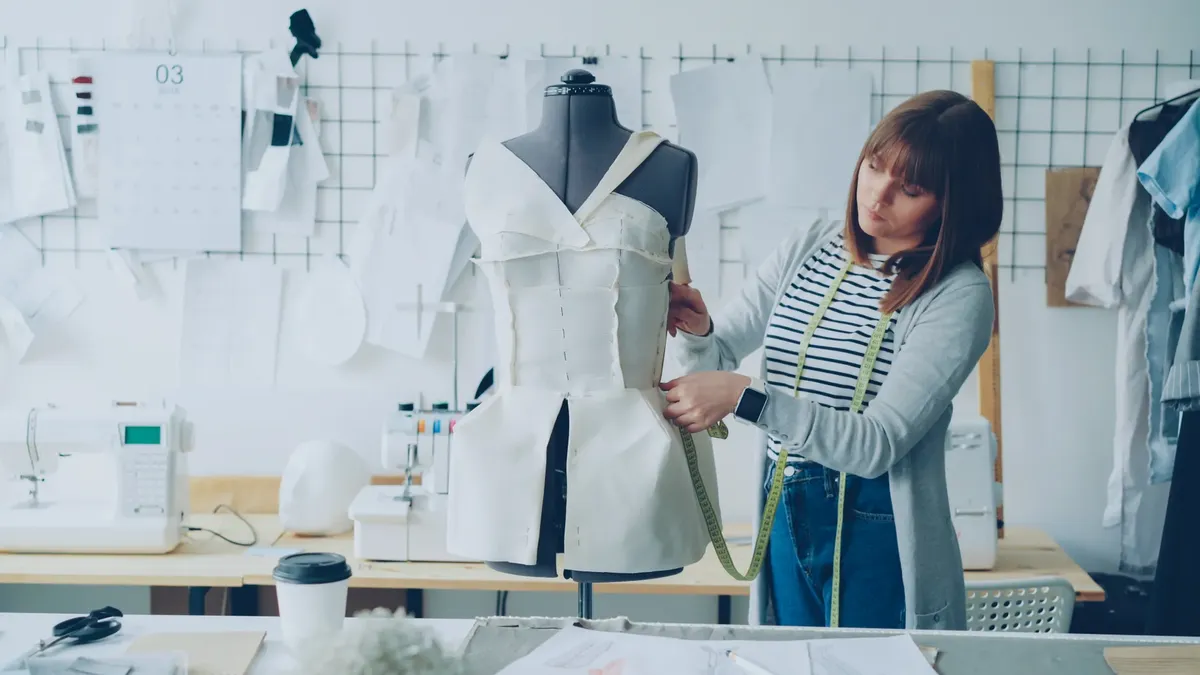
A designer adjusts a mannequin, noticing the fit of a modern garment. The relationship between fashion and the human body is a complex aspect of professional training.
The European Commission's goal for 2030 is to encourage consumers to invest in high quality products rather than fast fashion, and to ensure all textile products are durable, whether they are recycled materials or not, according to The European Commission.
Industry standards often influence physical expectations within the field. Historically, certain trends have imposed difficult physical requirements on professionals. For instance, some fashions, modeled by very, very slim boys—and not men my age—required losing at least 40 kg.
Navigating these pressures is a reality of the professional world.
The focus on health and well-being is becoming a central part of modern fashion discourse. Training should include an understanding of how clothing affects the wearer's lifestyle and how to promote healthy behavior through design.
The fast-paced nature of fashion production can lead to irregular schedules and high-stress environments.
What are the limitations of formal education?
A graduate looks out over a city skyline, contemplating the next move. While school provides a base, it cannot replace the reality of market fluctuations.
One limitation of formal education is that it may not always keep pace with the rapid shifts in global textile management and consumer behavior. While a curriculum might focus on design, the reality of the market involves complex sorting and recycling processes.
| Aspect | Industry Focus |
|---|---|
| Product Type | High quality and durable goods |
| Market Segment | Used clothing markets |

An advisor must balance academic learning with these practical market realities.
Academic settings often struggle to keep pace with the rapid technological shifts and real-world market fluctuations of the fashion world.
The subject here is UK fashion school needed?.
The same subject is also called Fashion advisor training UK.
The same subject is also called Best fashion education abroad.
This part also covers UK fashion school vs career.
This part also covers Fashion advisor career path.
UK fashion school vs career
Related




Comments 0